How ChatGPT Surfaces and Mentions Brands?
ChatGPT is no longer a frozen knowledge base. How live retrieval and entity associations decide which brands it names, and what moves each one.
Author
Lead GTM
Cynthia J is part of the GTM team at Paprik AI with 2+ years of experience helping brands understand and improve their visibility across AI search platforms.
How ChatGPT Actually Works Today
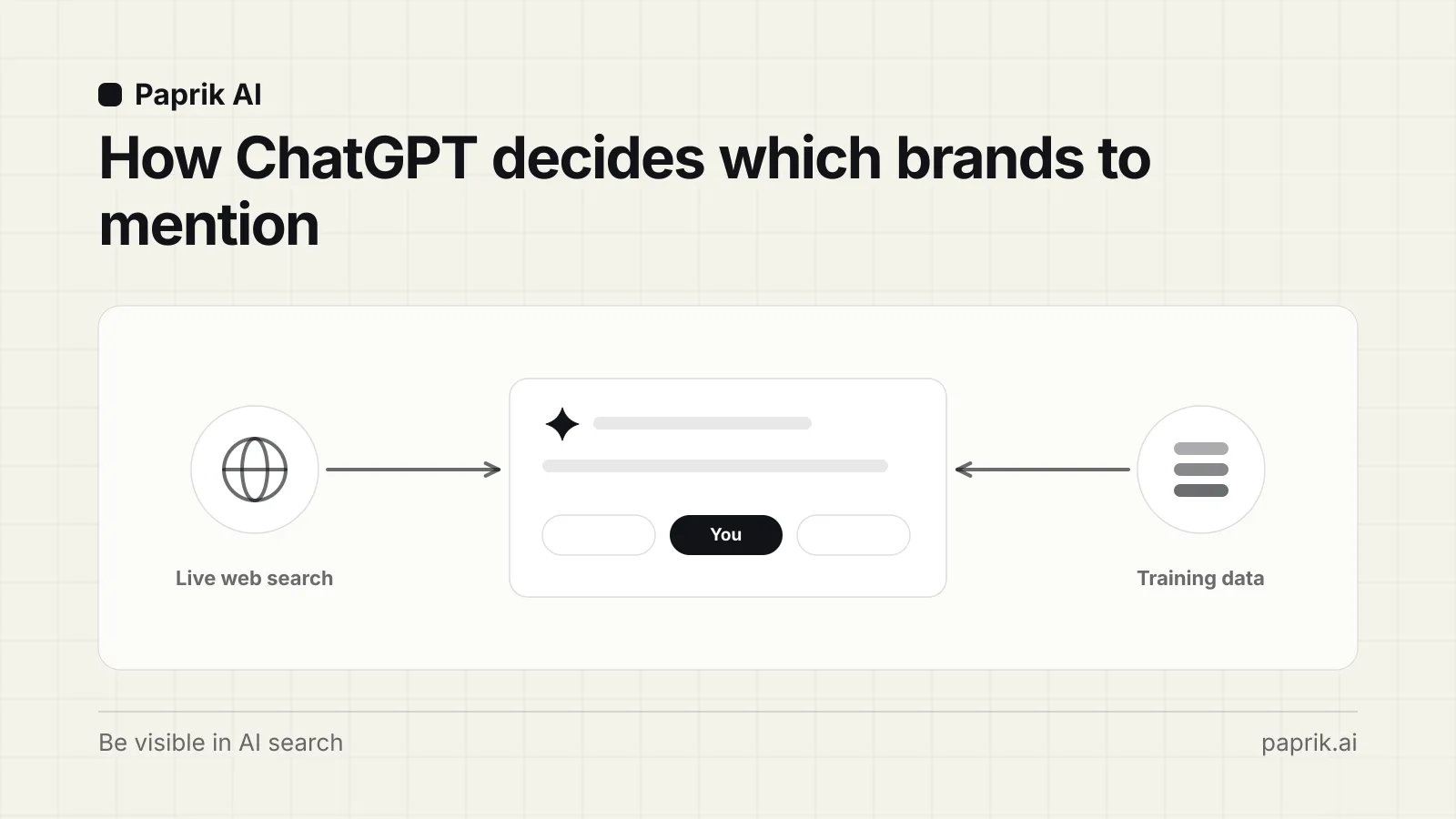
The picture most marketers carry of ChatGPT - a static knowledge base frozen at a training cutoff, unable to see the current web - is no longer accurate for the queries that matter most to brands. ChatGPT now performs live web search for a wide and growing range of queries: product comparisons, software recommendations, 'best X for Y use case' questions, pricing queries, brand-specific questions, and anything where freshness matters. Users on both free and paid tiers see cited sources listed alongside answers. That is live retrieval, not training data recall.
Training data still matters - but differently than the old framing implied. It shapes the model's baseline entity associations: which brands it has 'learned' belong to a category, how it describes them by default, and how confidently it treats them as known quantities. Think of it as brand recognition rather than brand visibility. A brand the model knows well from training will be mentioned more confidently and consistently - but this is now one input, not the only one.
The more useful framework is this: ChatGPT brand visibility has two distinct dimensions that require different optimisation approaches.
Dimension | What it means | What drives it | How fast it changes |
Content visibility | Your pages are retrieved and cited when ChatGPT searches the web | Page structure, answer directness, ranking, schema, crawlability | Days to weeks |
Entity/brand visibility | Your brand name is confidently associated with your category | Third-party coverage, entity consistency, authoritative sources, training data | Months - but not gated behind 12–24 month model cycles for retrieval-active queries |
Most brands have a gap in one and not the other. A well-known brand with weak content structure earns brand mentions but loses content citations to better-structured competitors. A newer brand with excellent structured content can earn citations before it has strong entity recognition. Both signals matter; they require different fixes.
How to Get Your Content Retrieved and Cited in ChatGPT Answer?
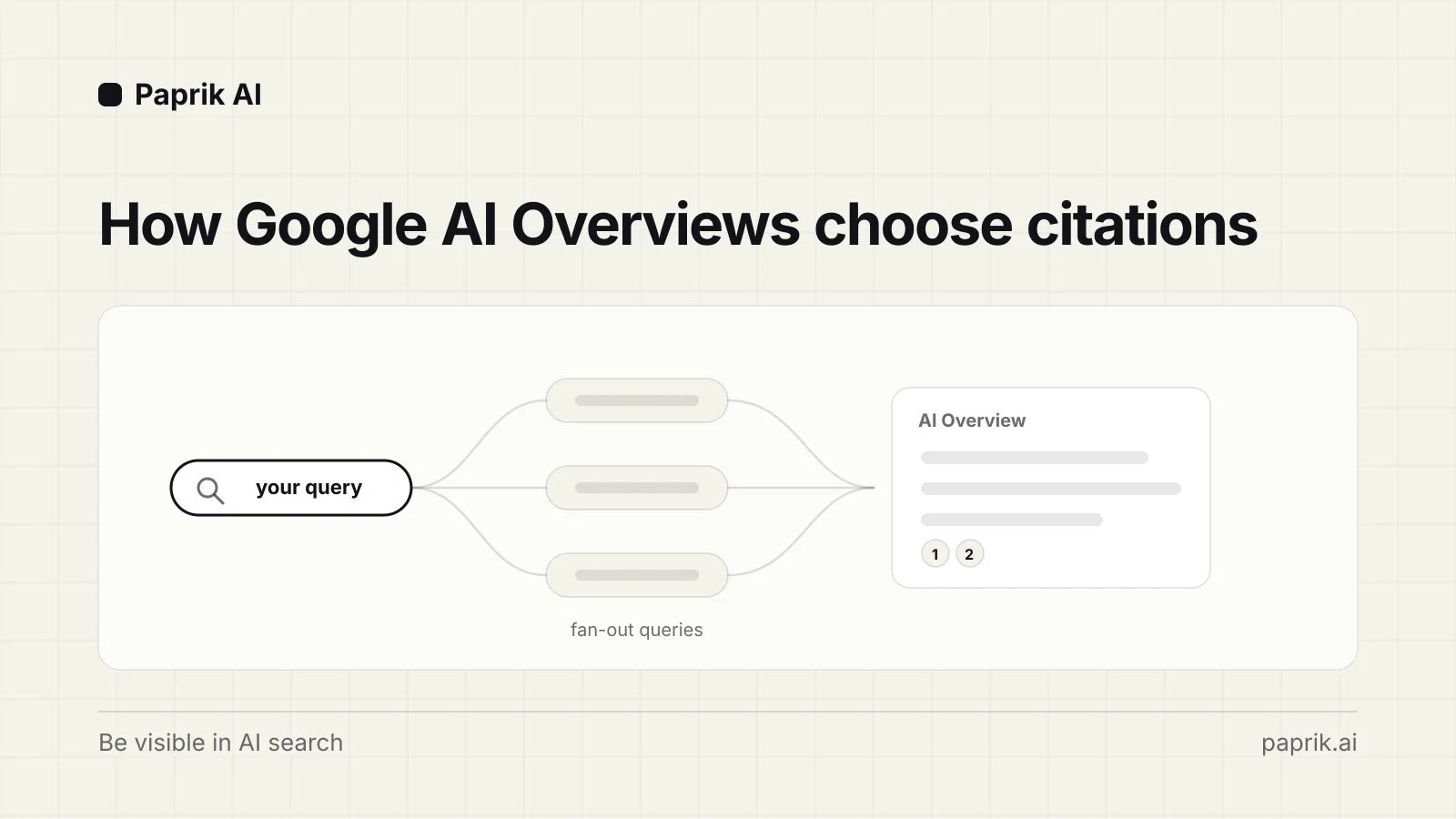
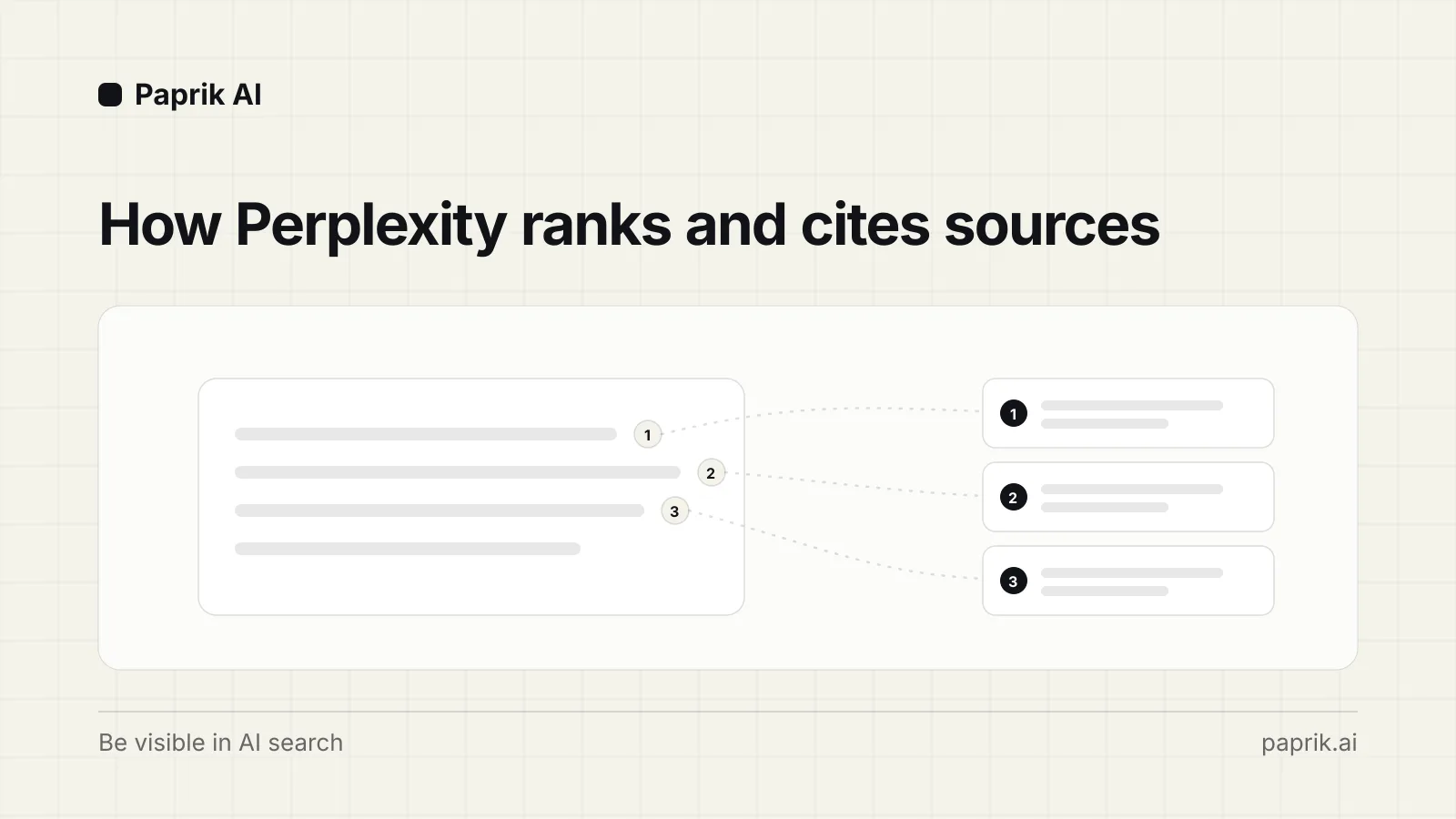
When ChatGPT performs web retrieval, it selects pages or documents based on a set of signals that are well within a team's control. These are the same signals that drive citation in Perplexity and Google AI Overviews - which is useful, because improvements made for one engine generally lift performance across all.
What the retrieval system looks for
Direct first-paragraph answer: the model scans retrieved pages quickly. A page that answers the query in the first paragraph - before any preamble, backstory, or introduction - is far more likely to be cited than one that buries the answer. The practical rule: state the direct answer first, expand afterward. This is the single highest-leverage structural change available.
Answer-first structure with FAQ sections: content that asks and directly answers specific questions in a structured format extracts cleanly into AI responses. FAQ schema markup makes this machine-readable, but structural clarity matters even without it.
Technical accessibility: pages that require JavaScript rendering, sit behind login walls, or load slowly are deprioritised in retrieval candidate sets. Fast, crawlable, plaintext-accessible pages perform better. This is identical to standard technical SEO - the same work benefits both.
Freshness signals: when two pages answer a query equivalently, ChatGPT's retrieval tends to favour more recent content. Publication and update dates visible in page metadata help.
Credentialed authorship: bylined content with demonstrable expertise signals - author bio pages, consistent bylines, institutional affiliations - is weighted above anonymous content.
New brands can earn content citations immediately. ChatGPT's live retrieval does not apply a domain authority filter before selecting candidates - it applies an answer quality filter. A newly launched page with a clear, directly structured answer to a specific query can appear in ChatGPT results the same week it is published, if it is indexed and the answer is genuinely better than what existing results offer.
How to Get Your Brand Mentioned in a ChatGPT Answer?
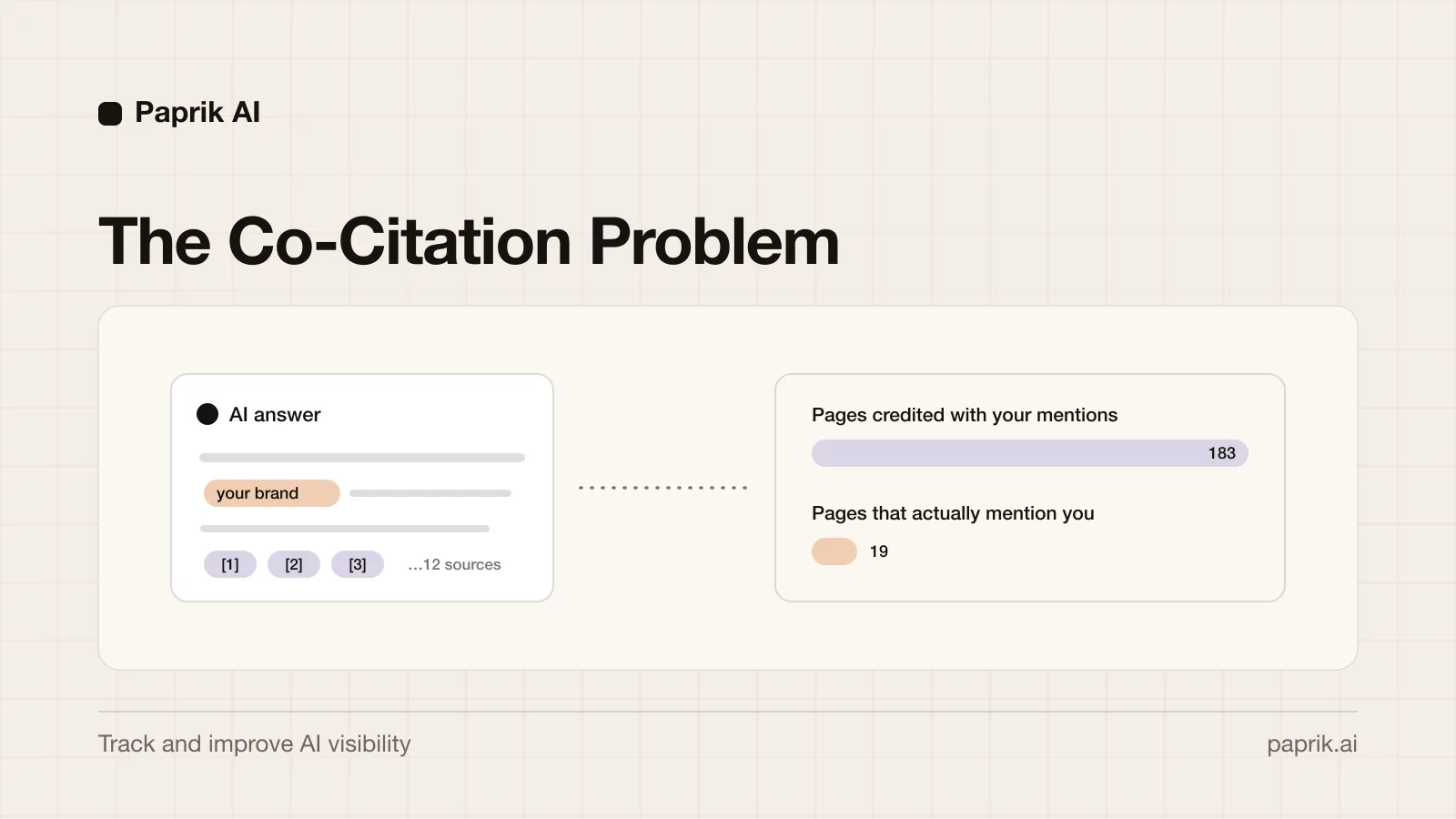
Content citation and brand mention are not the same thing. A page on your site might be cited as a source in a ChatGPT answer without your brand name ever appearing in the response text. That is content visibility without entity visibility. Conversely, a brand the model knows well from training may be recommended by name even on queries where no retrieval happens. The mechanisms are distinct.
Brand visibility is built through the consistency and authority of how your brand is described across independent sources - not sources you own or control. This includes:
Third-party press coverage in credible industry publications: mentions in editorial content that the model has learned from, describing your brand in consistent, accurate terms
Independent review sites and analyst listings: G2, Capterra, analyst reports, and comparison roundups from publishers not affiliated with you
Community and forum mentions: Reddit, niche communities, Stack Overflow - where real users describe what your product does in natural language
Wikipedia and Wikidata: if eligible, these carry disproportionate weight because they are structured, independently verified, and written in the neutral encyclopedic tone models are trained to trust. Useful when you can get them - not a prerequisite for entity visibility overall
Consistent category language: the model builds entity associations from patterns across all these sources. If your brand is described as a 'project management tool' in one place, an 'AI productivity platform' in another, and a 'task automation system' in a third, the model's entity understanding fragments. Use consistent language to describe what you do across every external source.
Brand visibility takes longer to build than content visibility - but it is not locked behind a 12 to 24 month model update cycle for the queries that trigger live retrieval. When ChatGPT retrieves and synthesises content, it draws on both retrieved pages and entity associations simultaneously. A brand gaining rapid third-party coverage can see that reflected in retrieval-based answers within weeks, not years.
What to Do If ChatGPT Isn't Mentioning Your Brand
Start with a diagnostic. Run 10 to 20 queries about your category in ChatGPT and few other AI engines like Gemini, Perplexity and others - the questions your buyers actually ask - and record exactly which brands appear, how they are described, and what sources are cited. This tells you which problem you have. A handful of runs per prompt is enough to see the stable shortlist - here's why.
If you are absent from answers entirely
If your brand appears in other AI engines like Gemini and Perplexity but not ChatGPT, the issue is entity recognition, not content structure - your pages are being retrieved in at least one retrieval system but the model is not naming you. The fix: build third-party coverage and entity consistency across independent sources. If your brand is missing across most AI platforms, the issue is usually discoverability or content structure. Your content may not be easily retrievable, clearly structured, or relevant to the prompts being tested.
If you appear but are described inaccurately
Identify the likely source of the inaccuracy - which publication or page is most likely responsible. The fix operates at the source level, not the model level. Publish accurate, authoritative corrective content. If the error is on Wikipedia, engage with the editorial process to correct it. You cannot submit corrections directly to OpenAI; you improve the source material that future retrieval and training will draw from.
If competitors appear consistently but you do not
Audit their source infrastructure: what third-party sources are citing them? Which publications, forums, and review sites mention them that do not mention you? This is the gap map for your entity-building programme. For content citations specifically, audit the structure of the pages that are being cited - how does their first-paragraph answer compare to yours?
ChatGPT vs Other AI Engines - Quick Reference
Engine | Primary data source | Cites sources? | Optimisation speed |
ChatGPT | Live retrieval + training entity knowledge | Yes, for retrieval-based answers | Content: days–weeks; Entity: weeks–months |
Google AI Overviews | Live retrieval from indexed pages | Yes, with source links | Weeks to months |
Perplexity | Live retrieval on every query | Yes, always | Days to weeks |
The practical implication: Perplexity gives the fastest feedback on content structure improvements. Google AI Overviews and ChatGPT retrieval-mode results follow within weeks to months. Entity-level brand recognition across all three engines builds over a longer horizon - but the timeline is shaped by the pace of your earned media programme, not a fixed model update calendar.
Paprik tracks your brand's citation rate across ChatGPT, Google AI Overviews, Google AI mode, Gemini, Claude and Perplexity daily - using UI-based methodology that captures what real users see, not what the API returns. See which queries you're winning, which you're losing, and which sources are driving competitor visibility. Start your 7-day free trial at paprik.ai - no credit card required.
Frequently asked questions
Does ChatGPT use live web search or just its training data?+
Both, depending on the query. ChatGPT now performs live web retrieval for a wide range of queries - product comparisons, recommendations, factual questions, 'best X' queries - across both free and paid tiers.
Can a new brand with low domain authority appear in ChatGPT?+
Yes. ChatGPT's live retrieval does not filter by domain authority before selecting citation candidates - it filters by answer quality. A newly published page with a clear, direct, well-structured answer to a specific query can be retrieved and cited the same week it is indexed.
How long does it take to improve my ChatGPT visibility?+
For content citations in retrieval-based answers: days to weeks from publication or structural improvements. For broader entity recognition - getting your brand named confidently in answers - the timeline depends on the pace of your third-party coverage and earned media programme.
Why does ChatGPT mention my competitor but not me, even though I outrank them?+
Because search ranking and AI visibility are built on overlapping but different signals. Your competitor likely has stronger entity recognition - more consistent third-party mentions, more coverage in independent publications, clearer category language across external sources. They may also have better-structured content that extracts more cleanly in retrieval.
Does the API give the same results as the ChatGPT interface?+
No. According to Paprik’s research, the ChatGPT UI shows approximately 84% more unique brand mentions than equivalent API calls. This is a significant measurement distortion: AEO tools that track via API systematically undercount what real users see. Accurate visibility tracking requires UI-based methodology - running queries the way users do, not via the API.
Can I submit my brand to ChatGPT or correct what it says about me?+
No direct submission mechanism exists. OpenAI or ChatGPT does not accept brand correction requests for training data. The only lever is improving the source material that future retrieval and training will draw from: publish accurate content on your own site, build corrective coverage in authoritative third-party publications, and correct Wikipedia errors through the editorial process if applicable.
What's the single most impactful change I can make today?+
Restructure your most important pages so the direct answer to the primary query appears in the first paragraph - before any introduction, context, or preamble. This single change improves citation rates across all AI engines, often within days of publication.
How do I track whether my ChatGPT visibility is improving?+
Run 20 to 50 category queries in ChatGPT monthly, record which brands are cited and whether your URLs appear as sources, and calculate a citation rate over time. Paprik automates this daily with UI-based tracking - capturing what real users see - and benchmarks your performance against competitors, so you can identify which queries you are winning and which need work without running queries manually.