How Do You Influence an AI Answer? Start With What It Searches For
You can't change what an AI model knows, but you can change what it reads. AI engines answer recommendation questions by running several searches first, and they pick the brands to name before they look any of them up. How that works, and the three places a brand can influence it.
Author
Founder
Abhilash is the Founder of Paprik AI. He writes about AEO, AI search visibility, and how brands can win in AI-driven discovery.
A lot of people think influencing what AI says about their brand means training the model, or somehow getting the brand into its memory. Neither is something you can do. What you can change is what the AI reads while it answers. For any question that needs current information, and "which tool should I use?", AI engines search the web first and write the answer from what they find.
So the useful question is what they search for, and in what order. The order is the part most teams miss: the AI decides which brands to name before it reads anything about them.
TL;DR
AI engines search the web before answering any question that needs current information, and "which brand is best?" is one of them.
They don't search your exact question. They break it into several related searches, called fan-out queries, and answer from what those find.
For a recommendation, ChatGPT's fan-out usually has two parts: a broad category search (e.g. "best CRM for small startups"), then searches for specific brands, often their official pages (e.g. "official Zoho pricing").
By the time it searches a brand by name, it has already decided to mention it. Brands ChatGPT searched by name were named in 97% of answers; brands it didn't, 19%.
So the influence sits in what the category search finds and what the model already associates with your category. Your own site matters most once you're on the list.
How AI searches before it answers
When someone asks "what's the best CRM for a small startup?", the engine doesn't type that sentence into a search box. It splits the question into several narrower searches, called fan-out queries, reads what comes back, and writes one answer from it. Google describes this for its own AI Overviews and AI Mode: "multiple related searches across subtopics and data sources" for a single answer.¹
Here is one of ChatGPT's answers to a question we track:
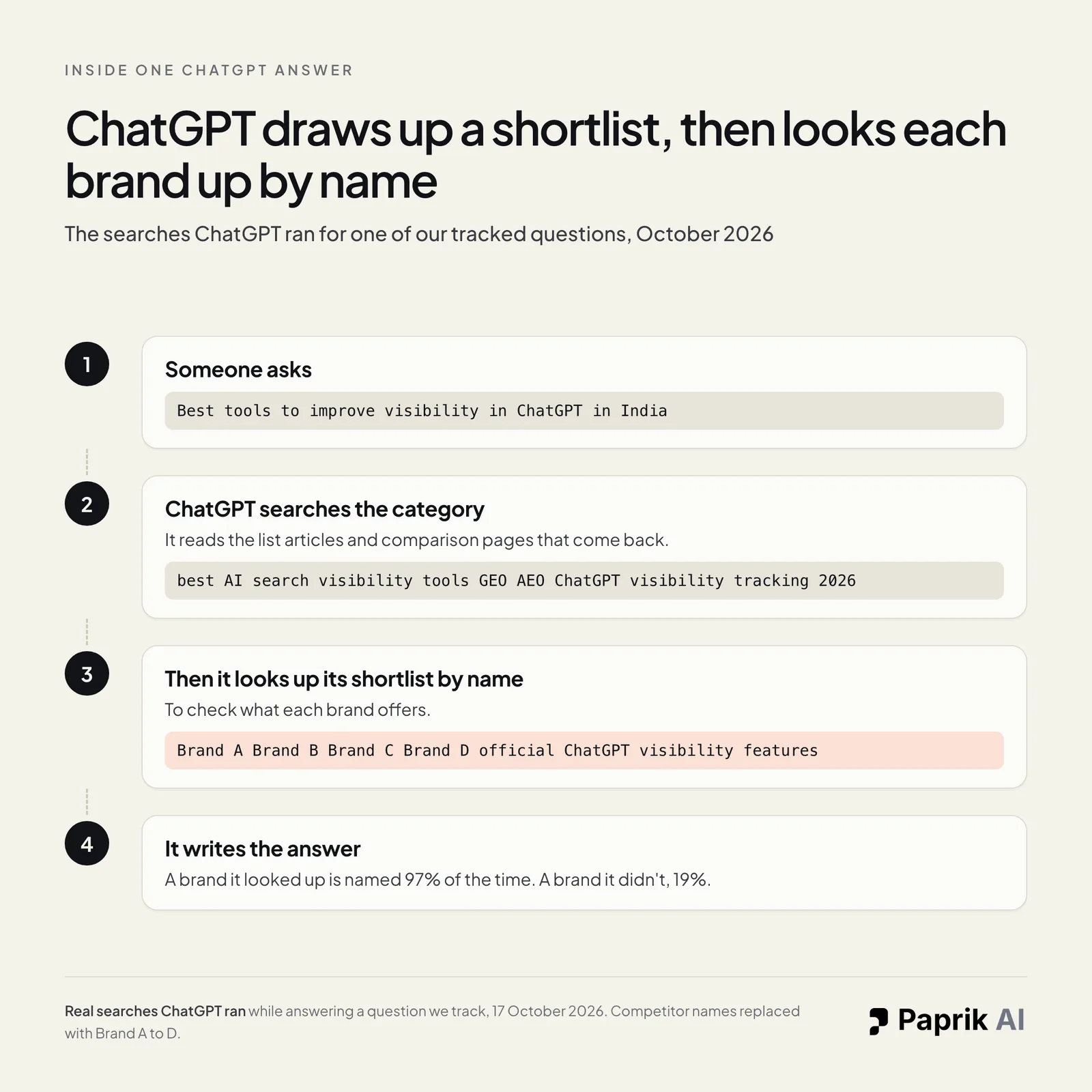
It ran two searches. The first is the question reworded the way a list article would be titled, with the year added so the results are recent. The second is four brand names and the word "official". By the time ChatGPT ran it, it had already chosen which brands to write about. It was checking their details.
The brands are picked before they're looked up
It's tempting to read that second search as the moment a brand gets considered. The data says otherwise. We took 833 ChatGPT answers in two categories, and for each of 14 brands asked two things: did ChatGPT search for this brand by name, and did the answer name it?
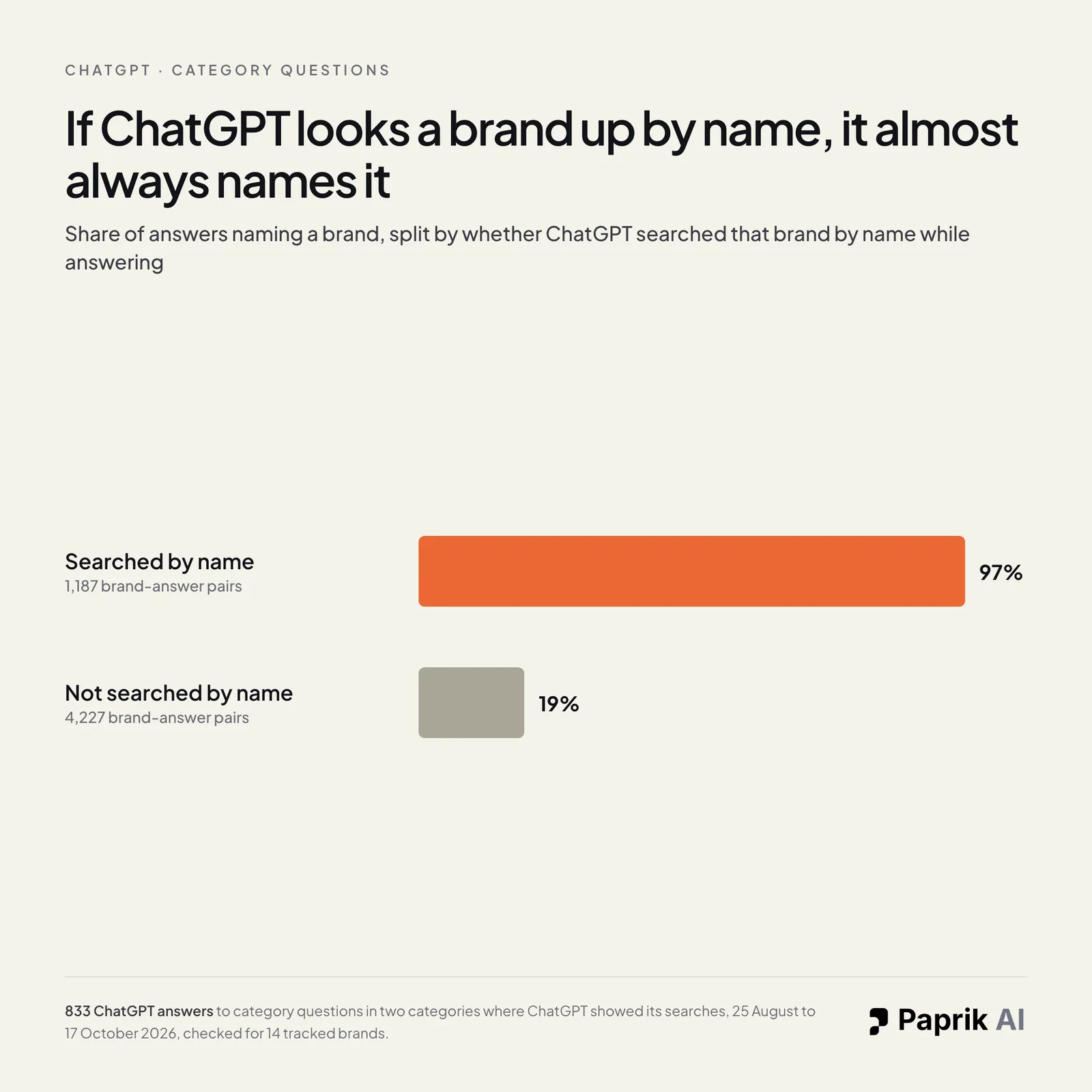
When ChatGPT looked a brand up, the answer named it 97% of the time. When it didn't, 19%. The lookup doesn't earn the mention. ChatGPT looks up the brands it already plans to recommend, to get their details right, so the decision happens earlier.
Where the shortlist comes from
If the brands are chosen before the AI reads about them, the choice comes from two places:
What the model already knows. Every AI engine runs on a model trained on a large slice of the web. Brands that many pages describe as part of a category become part of how the model thinks about that category. This changes slowly, over months.
What the category search finds. The first search returns list articles, comparisons, reviews and forum threads. Brands that keep appearing across those pages become candidates.
Your website is in neither. Both are made of other people's pages that put your brand next to your category, and they feed each other: the lists an engine reads today become part of what the next model learns.
How to influence an AI answer
That leaves three things to work on, and the order matters.
1. Get onto the pages the category search finds. This is the fastest lever. Find the list articles, comparisons and reviews the engines cite for your category's questions, and get included in them, accurately. In our own category, the page cited most since late August is a list of the best tools on another company's blog. Each engine searches its own index (Google's engines search Google, Copilot searches Bing), so the pages differ by engine and are worth checking one engine at a time.
2. Make your category association consistent. This is the slow lever, and it works on what the model already knows. Describe what you do in the same words everywhere: your site, directories, review sites, press and your founders' posts. If one site calls you an analytics tool and another calls you an agency, neither association gets strong. Our guide to how ChatGPT surfaces and mentions brands goes deeper on this.
3. Make sure the brand search finds the right things. Once you're on the shortlist, the engine looks you up, with searches like "official Zoho pricing" in the CRM example. Whatever ranks for those searches is what it says about you. Clear, current pricing, features and comparison pages on your own site, and accurate third-party pages about you, are what it should find. This is where your website has the most say.
Most teams start with the third, because it's the one they control. It's worth doing, but it only pays off after the first two have put you on the list.