Why Can't We Just Fix Our Own Website? What AI Cites When It Recommends a Brand
When an AI engine recommends a brand in answer to a general question, it cites that brand's own website about 1 time in 5. What it cites the other four times, why the most-named brands lean on their own site least, and how much of your website's code needs to change.
Author
Founder
Abhilash is the Founder of Paprik AI. He writes about AEO, AI search visibility, and how brands can win in AI-driven discovery.
At some point during a call with a prospective client, usually after we've shown them where their competitors appear in ChatGPT and where they don't, two questions almost always come up:
Do we need to make changes to our website's source code?
Can't we just add all the information ChatGPT doesn't know about our brand to our own website? Why do we need to bother with other websites?
It's a fair challenge: your website is the one place you fully control.
The short answer is that AI engines rarely take a brand's word for it. When an engine recommends a brand in answer to a question, it cites that brand's own website only ~20% of the times. ~80% of the times, the source is someone else's website.
TL;DR
Across 25,739 brand recommendations in AI answers to general category questions, the recommended brand's own website was among the cited sources 22% of the time.
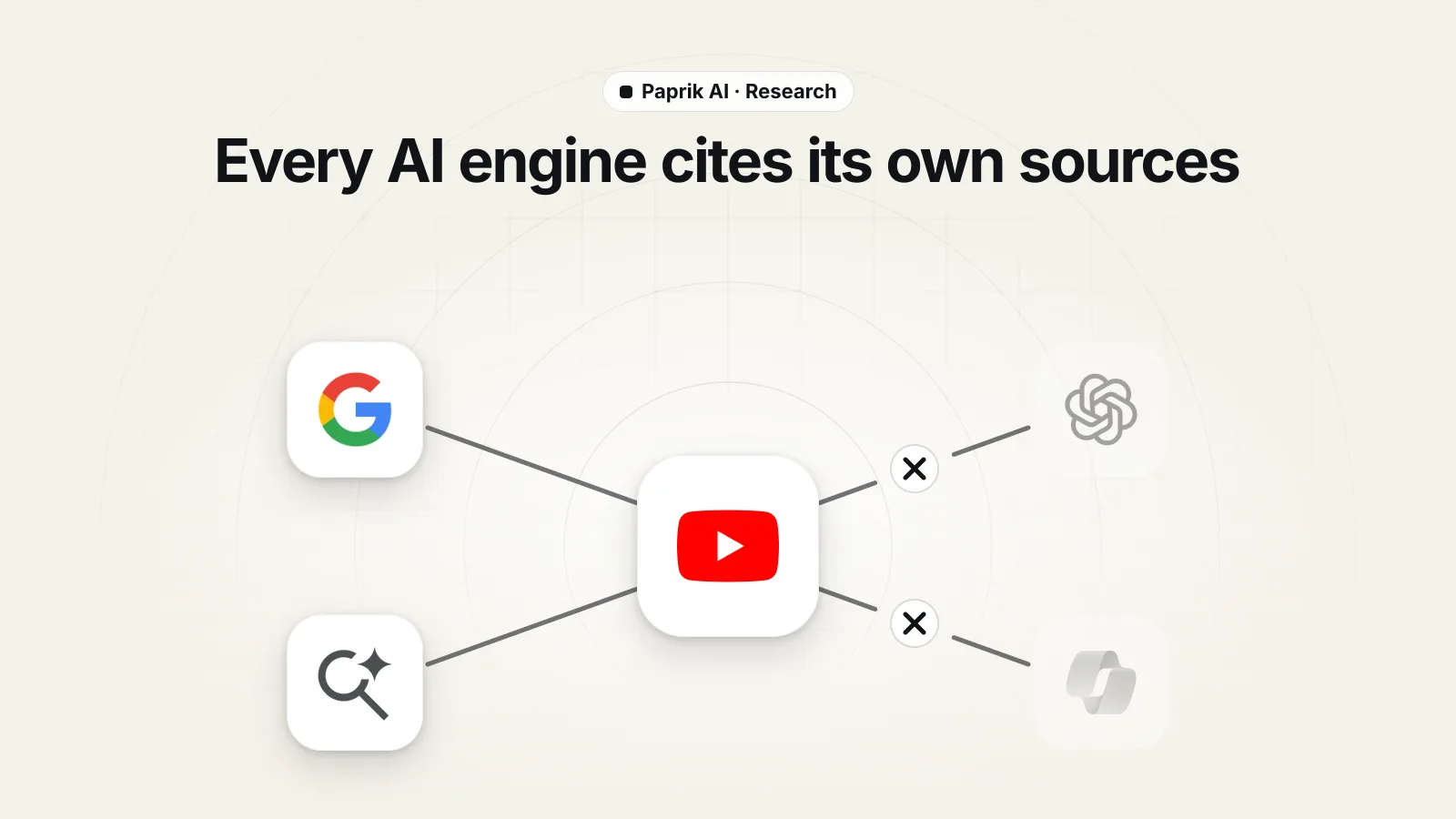
ChatGPT cited the brand's own site most often (41%). Gemini (8%) and Copilot (5%) almost never did.
Most websites need very less code work for GEO/AEO. Three checks matter: AI crawlers are allowed in, your key pages don't depend on JavaScript to show their text, and you have pages that answer the questions engines look up.
AI engines cite company websites, just not yours
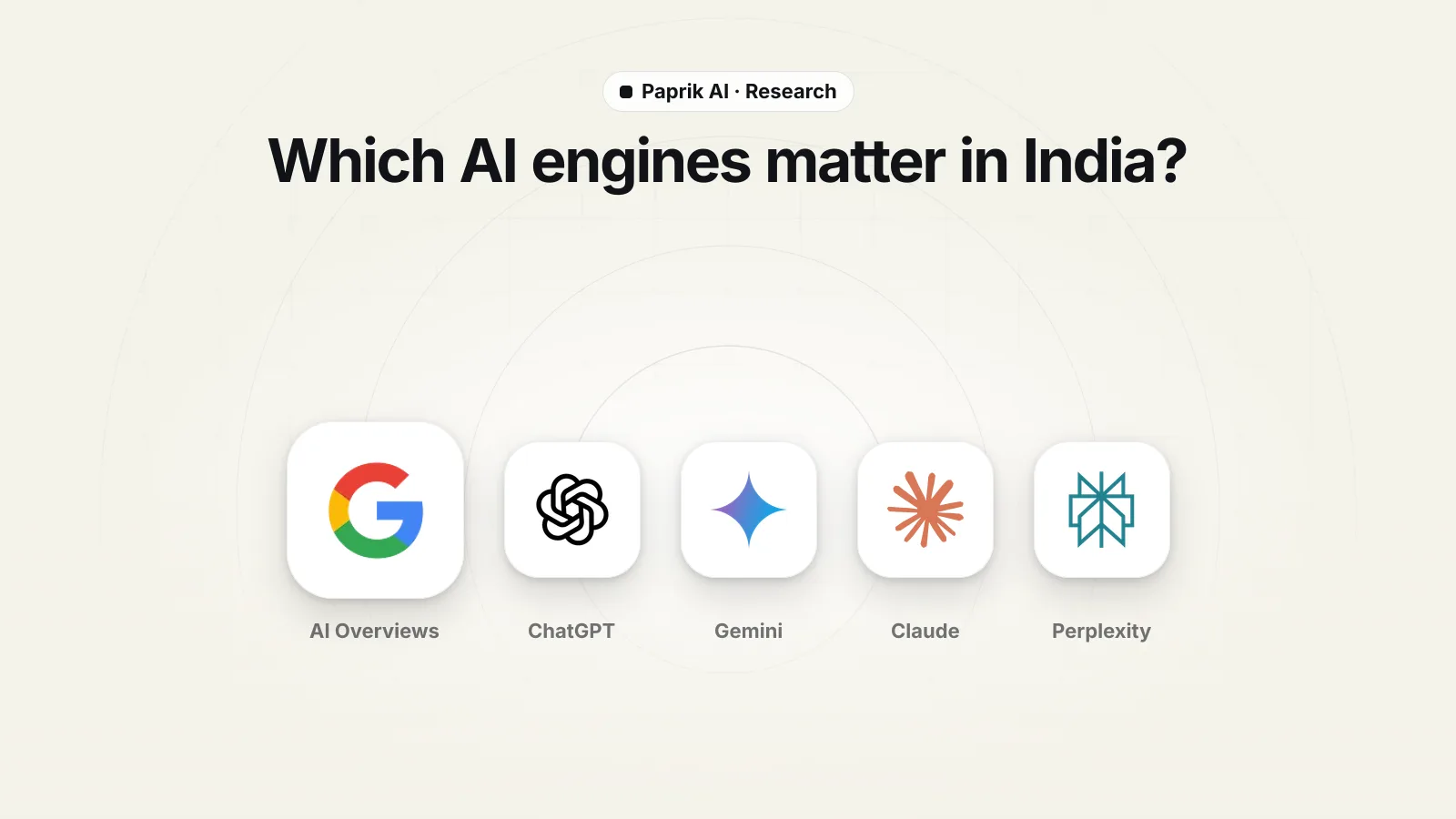
Start with our own category, AI visibility tools. Paprik asks the same questions to five AI engines every day: ChatGPT, Google AI Overviews, Google AI Mode, Gemini and Microsoft Copilot. The questions are the ones our buyers ask, like "best tools to improve visibility in ChatGPT in India" or "which AI visibility tools are worth the money?"
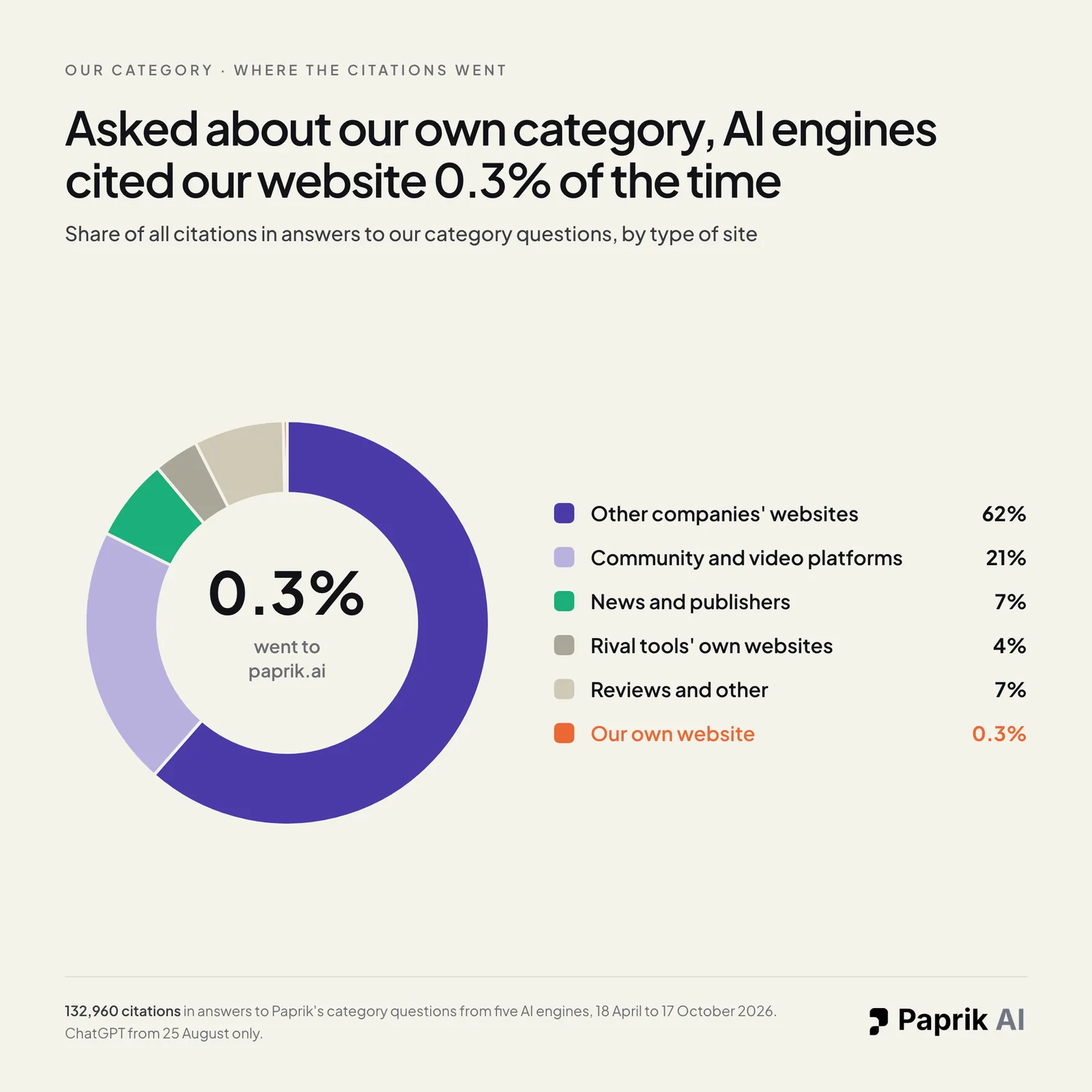
~60% citations went to company websites. Almost none of them were the websites of the tools being recommended. They were other companies writing about the category: SaaS blogs, marketing agencies, software directories. The single most-cited page across these questions, from late August to mid-October, was a Zapier blog post listing the best AI visibility tools. Four of the five engines cited it, in 604 answers.
When AI recommends a brand, it cites that brand's site about 1 time in 5
That could be a Paprik problem, so we looked at every brand we track: 17 brands' question sets across different categories, and every brand named in their answers, competitors included. We kept only non-branded questions ("best dictation app for Mac", not "is VibeType any good"). Then, for each time a brand was mentioned, we checked whether that brand's own website was cited as a source.
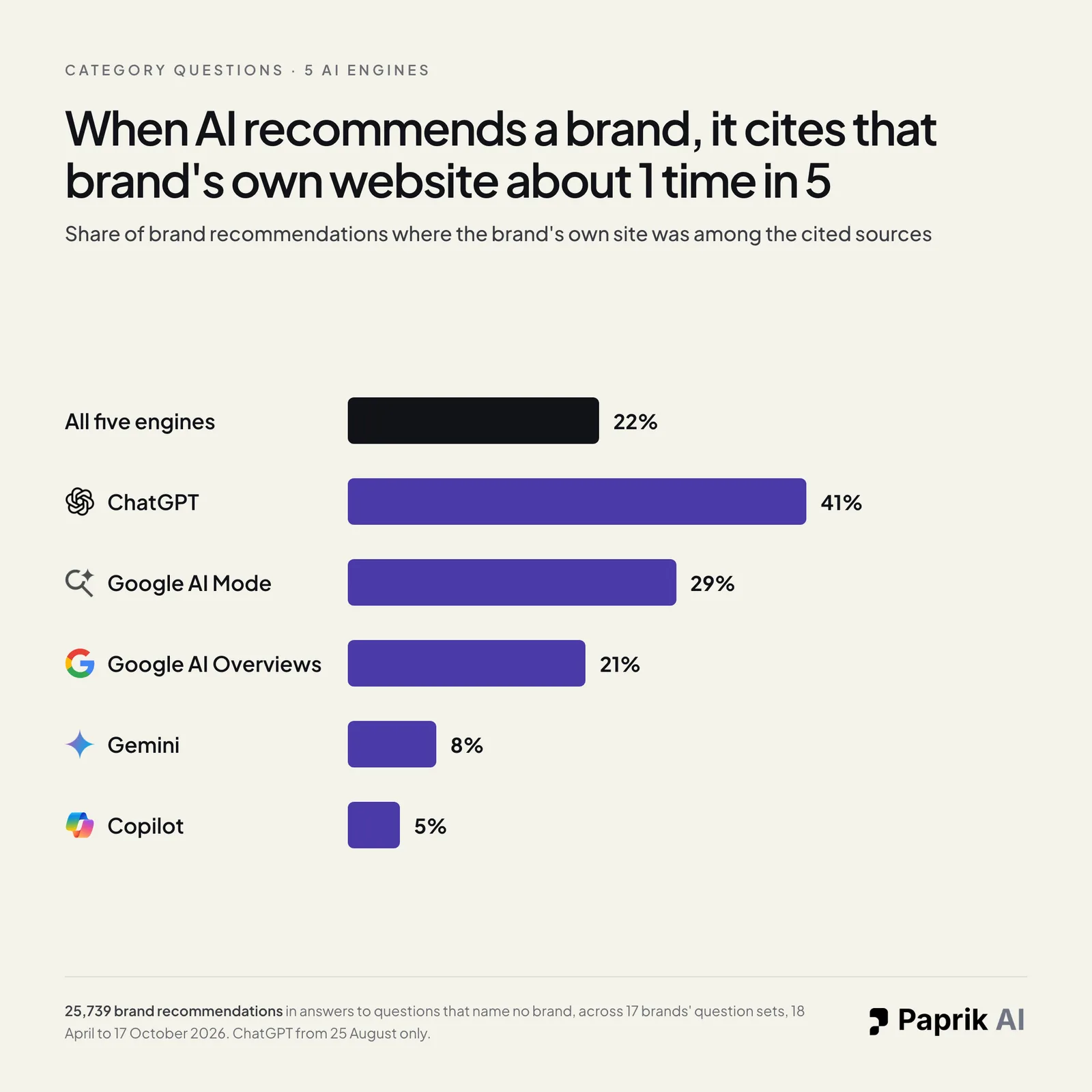
Across 25,739 recommendations, the brand's own site was cited 22% of the time.
The reason sits in the question. "Which tool is best?" is a comparison, and a vendor's own page can't answer a comparison. It can say what the product does. It can't credibly say it is better than the alternatives. So engines go looking for pages that compare: list articles, reviews, roundups, threads where users argue it out. When they find your name on those pages, they name you, and they cite the page that did the comparing.
ChatGPT is the exception worth knowing about. It cited the recommended brand's own site in 41% of cases, far more than any other engine. That fits what we see in its searches: after it has a shortlist, it often looks each brand up by name to check details like pricing and features, and those lookups land on brands' own pages. Gemini and Copilot almost never cited the brand they were recommending.
The most-recommended brands lean least on their own site
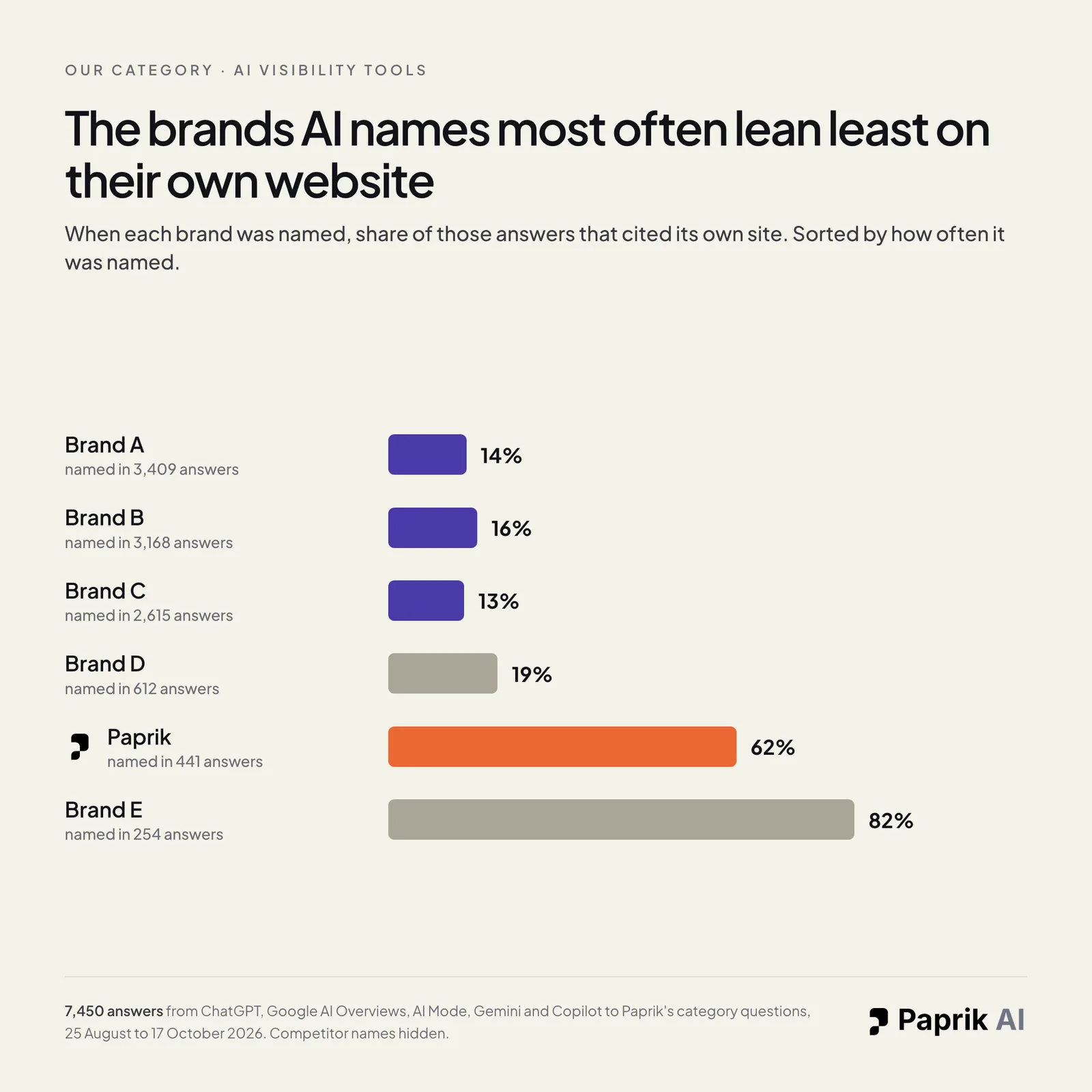
The three brands engines named most in our category were each named in more than a third of answers. When they were named, their own websites were cited only 13% to 16% of the time.
Paprik sits at the other end. We were named in 441 of 7,450 answers, about 6%, and when we were named, our own site was cited 62% of the time. That isn't a sign of strength. It means our mentions rest on a narrow base: our own pages, plus a handful of others. The smallest brand in the set leans on its own site even harder, at 82%.
I've started calling this the own-site ceiling. A brand that relies on its own website can be recommended, but only as often as engines happen to pick its own pages. To be named in a third of answers, other pages have to do the naming for you.
Your own site matters most when someone asks about you by name
The picture changes when the question names a brand: "Is Paprik a reliable tool?", "Paprik vs Profound", "Paprik pricing". On those questions, the brand's own site was cited in 57% of answers that named it.
We found the same split when we compared engines: on branded questions, engines lean on a shared set of sources, mainly the company's own website, Wikipedia and the major business press. On category questions, each engine goes its own way. We covered that in whether you need a separate AEO plan for every engine.
So the honest split is this. Your website is where engines go to learn what you are. Other people's pages are where they go to decide whether you're the answer.
Do you need to change your website's code?
The short answer is no. Unlike Google Analytics, Meta Pixel, or other marketing tools, AEO doesn't require you to install an SDK, plugin, or tracking script on your website.
You only need to make sure following 3 things are in order:
1. AI crawlers are allowed in. If an AI crawler can't fetch your pages, nothing else on your site matters to that engine. Check your robots.txt and your CDN or firewall settings, not only your CMS. Since July 2025, Cloudflare blocks AI crawlers by default and asks every new domain whether to let them in, so it's easy to have said no without realising it.¹
2. Your important pages show their text without JavaScript. ChatGPT's and Claude's crawlers fetch JavaScript files but don't run them, so they can't read content that only appears after scripts load. Google's crawler does run JavaScript.² If your pricing, product or comparison pages are built entirely in the browser, ChatGPT may be reading an empty page. View the page source, or load it with JavaScript turned off.
3. You have pages that answer the questions engines look up. When ChatGPT checks a brand by name, its searches ask for pricing, features, official documentation and alternatives. A clear pricing page, a features page and honest comparison pages are what those lookups land on. This is mostly content work, not code.
From the websites we have audited, the main blocker is generally that crawlers are blocked by default, and nobody at the company knew about it. Additionally, some important pages, like the About Us or pricing pages, were only readable after executing JavaScript, meaning these pages were as good as blank or very thin to most crawlers. Fixing this generally doesn't take a lot of effort; a few settings on your CDN or firewall, or some changes to your robots.txt, easily make your website available to crawlers. If you start simple, just making sure some of your important pages are rendered server-side helps them be visible to the crawlers.
Beyond those three, schema and technical polish help at the margin, but they won't get you into the lists that decide category answers.
Where the effort should go
Fix the foundation once. Crawlers allowed, text readable without scripts, and clear pages for what you are, what it costs and how you compare. This carries branded questions and the lookups.
Publish a fair comparison yourself. It's the one comparison page you control, and it's the shape of page engines look for.
Get onto the pages engines already cite for your category. The lists, reviews and threads that decide general questions, found per engine. Our guide on how to track AI visibility covers the method.
Check that a page names you before counting it. Our co-citation study found most pages cited next to a newer brand don't mention it.
Your website is necessary, and for a new brand it does more of the work than for anyone else. It just has a ceiling, and the brands AI recommends most have broken through it on other people's pages.
How we got to these numbers
Paprik asks a fixed set of questions to each AI engine every day and stores each answer with the sources it cites. For this post we used general questions only, the ones that don't name a brand. For every answer, we noted which tracked brands it named and checked whether any cited source sat on that brand's own website, counting its subdomains.