AI Cites Thousands of Pages. Each Engine Keeps Going Back to a Few Dozen
AI engines cite thousands of pages for the questions your buyers ask, but each keeps going back to a small set. A step-by-step guide to finding those pages for each engine, sorting out the ones you can act on, and getting onto them.
Author
Founder
Abhilash is the Founder of Paprik AI. He writes about AEO, AI search visibility, and how brands can win in AI-driven discovery.
In one month of tracking just 29 questions for one brand, five AI engines cited 3,973 different pages from 1,589 websites!
So the natural objection is: "There are thousands of pages AI refers to. How can we possibly change all of them? And we'd have to write content for all these partner sites? That sounds like too much work."
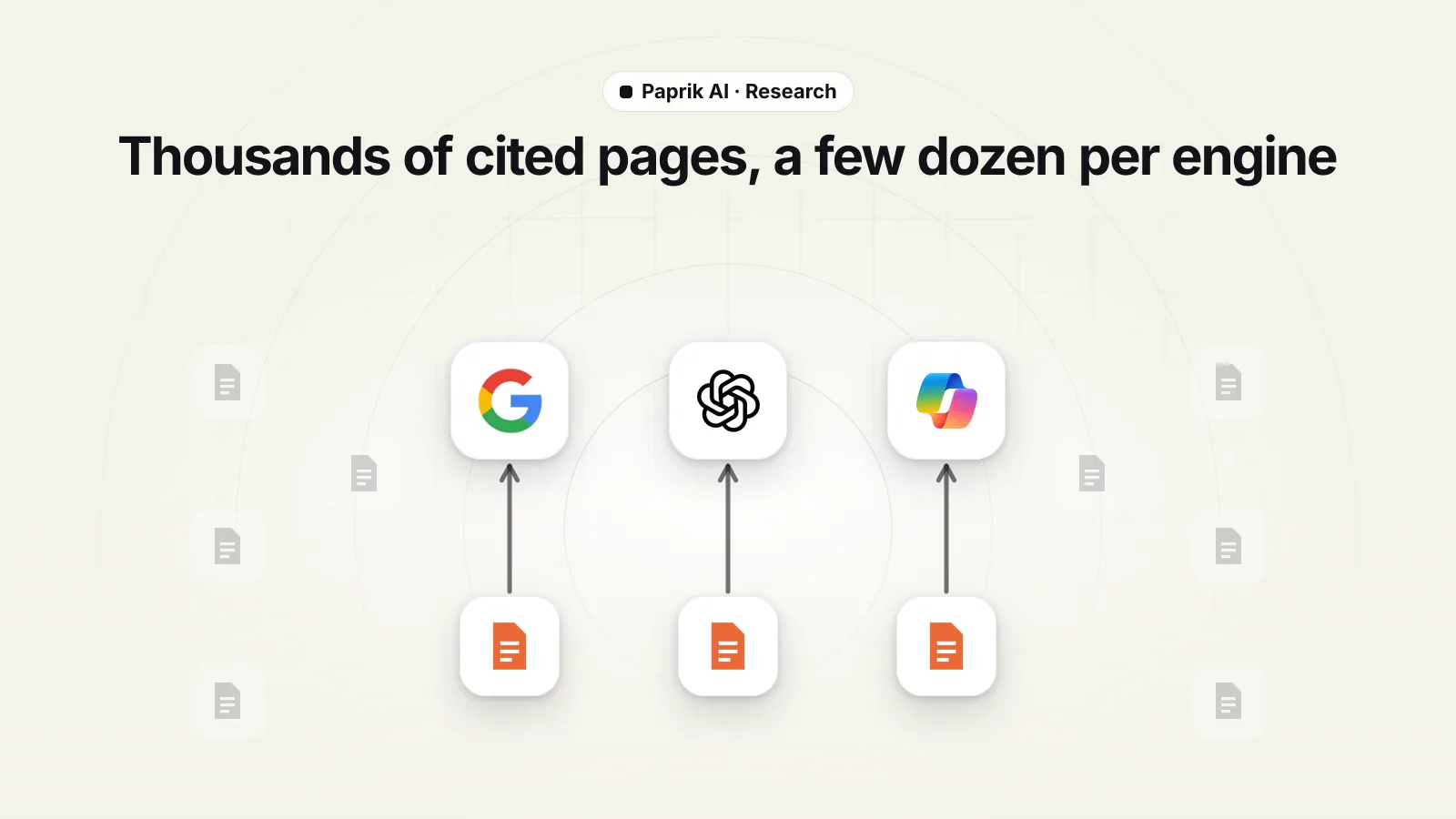
But almost none of those pages matter for long. Each engine keeps going back to a small set of pages, and that set carries about half of everything it cites. These are the most important pages you should watch out for and optimize for your brand. This guide walks through how to find them for each engine, sort out the ones you can act on, and get your brand onto them.
TL;DR
Most pages AI cites are one-offs, picked up for one answer and never seen again. Ignore them.
Each engine keeps going back to a small set of pages, its "regulars": pages it cites on 10 or more days a month. They are ~10% of the pages it cites and carry ~50% of its citations.
The engines don't share their regulars, so build one list per engine group: Google's AI engines, ChatGPT and Copilot.
From each list, keep the pages that name a competitor but not you. Drop pages on competitor's own sites, including competitors you don't track. You can't act on those.
Ask the authors of the remaining pages to add you, and publish your own comparison page for the lists you can't get onto.
Step 1: Collect a month of citations for each engine
Ask the same set of questions to each AI engine every day for a month, and record every page each answer cites. Use the questions your buyers ask before they've picked a brand ("best CRM for a small startup"). Our guide on how to track AI visibility covers how to choose them.
A single day's answers will mislead you. Most pages appear once and never again, and you can't tell which ones those are until you've watched for a few weeks.
Step 2: Find each engine's regulars
For every page, count the number of days each engine cited it. Pages an engine cited on 10 or more of the 30 days are its regulars. Count days, not answers: a page cited in 20 answers on one day is still a one-off. If you track only a handful of questions, lower the bar.
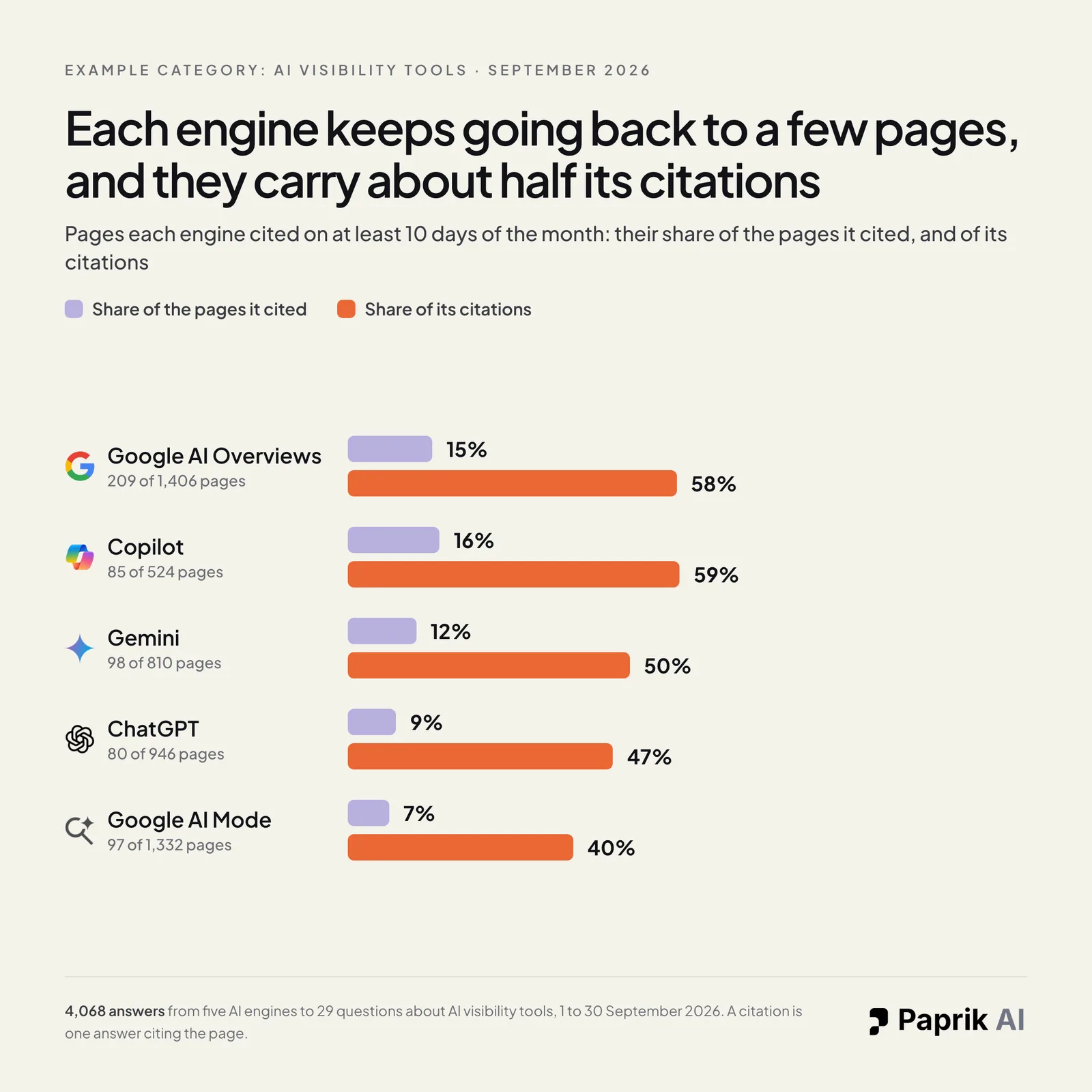
In the example, every engine's regulars were ~10% of the pages it cited and carried ~50% of its citations. They also hold up: most were still being cited weeks later, while most one-off pages weren't (which cited pages survive a shift). These are the pages to work on.
Step 3: Make one list per engine group
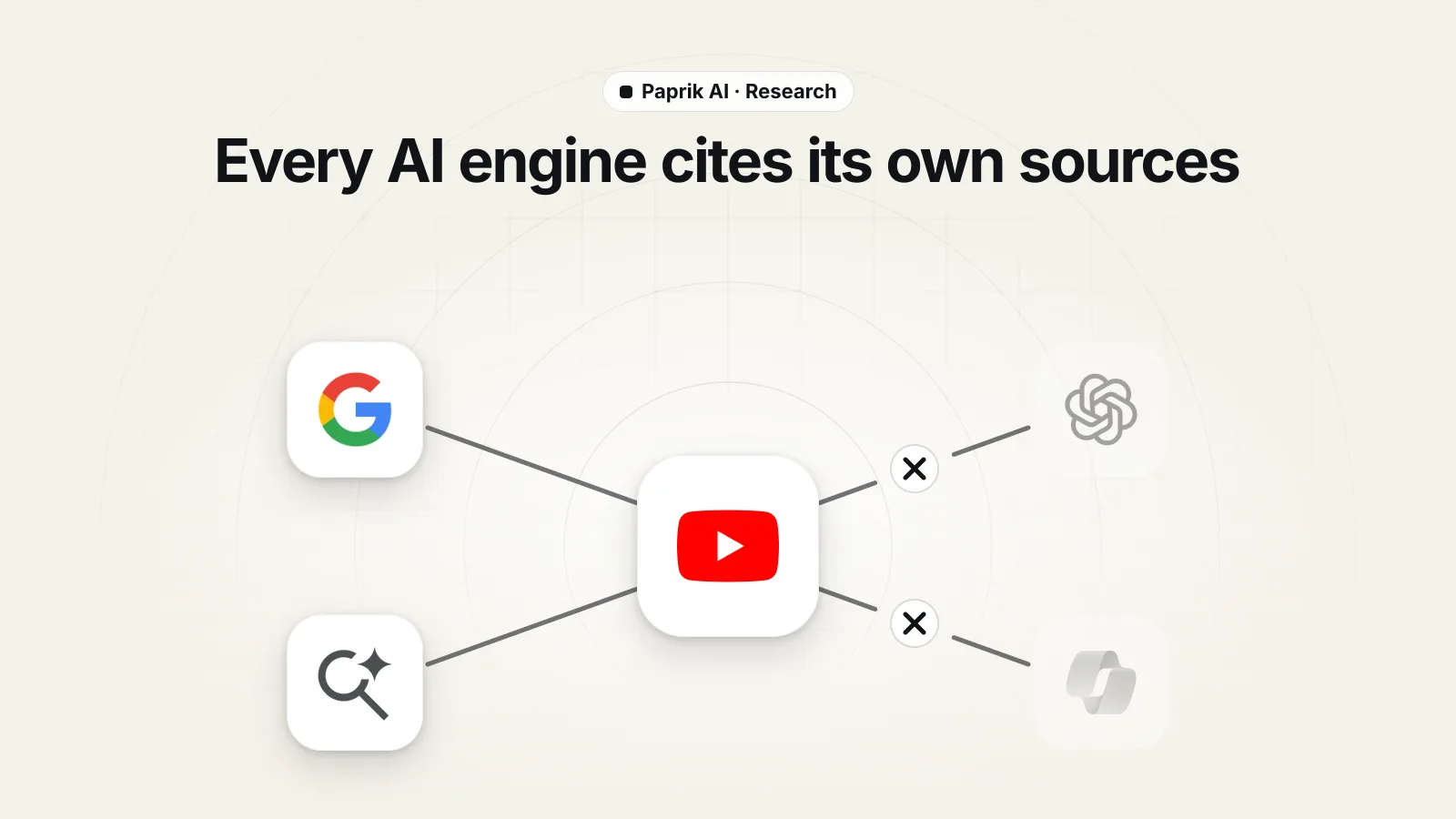
Each engine has its own regulars. Google's AI Overviews, AI Mode and Gemini lean on many of the same pages, so they can share one list. ChatGPT and Copilot each need their own. We found the same split in the sites each engine trusts.
You end up with three lists. Expect very little overlap between them, so don't assume work on Google's list helps you on ChatGPT.
Step 4: Sort each list
Open every page and read it. Don't rely on the page title or on the brands named in the AI answer that cited it: a page cited next to your brand often doesn't mention you at all. Our co-citation study found most don't, for newer brands. Put each page in one of four groups:
Names you. Check that what it says about you is correct, and keep it on a separate list to check every month.
Names a competitor but not you. These are your targets.
Is a competitor's own site. Skip it. In many categories, a good share of the "best tools" articles are written by vendors who rank themselves first and won't add a competitor.
Names no brand you track. Leave these for later. Some are how-to guides where a mention of your product could fit, but they're a weaker bet than group 2.
Reading every page by hand takes time. Paprik's Visibility Sources does this sorting for you: it reads each page the engines cite for your questions, shows which brands it names and which engines cite it, and labels pages on competitors' own sites, including competitors you don't track. Reddit threads and YouTube videos often block automated reading, so open those yourself whichever way you work.
Group 3 is usually bigger than teams expect, because the competitors you track are rarely the only ones writing about your category. Here's how the sorting played out in the example:
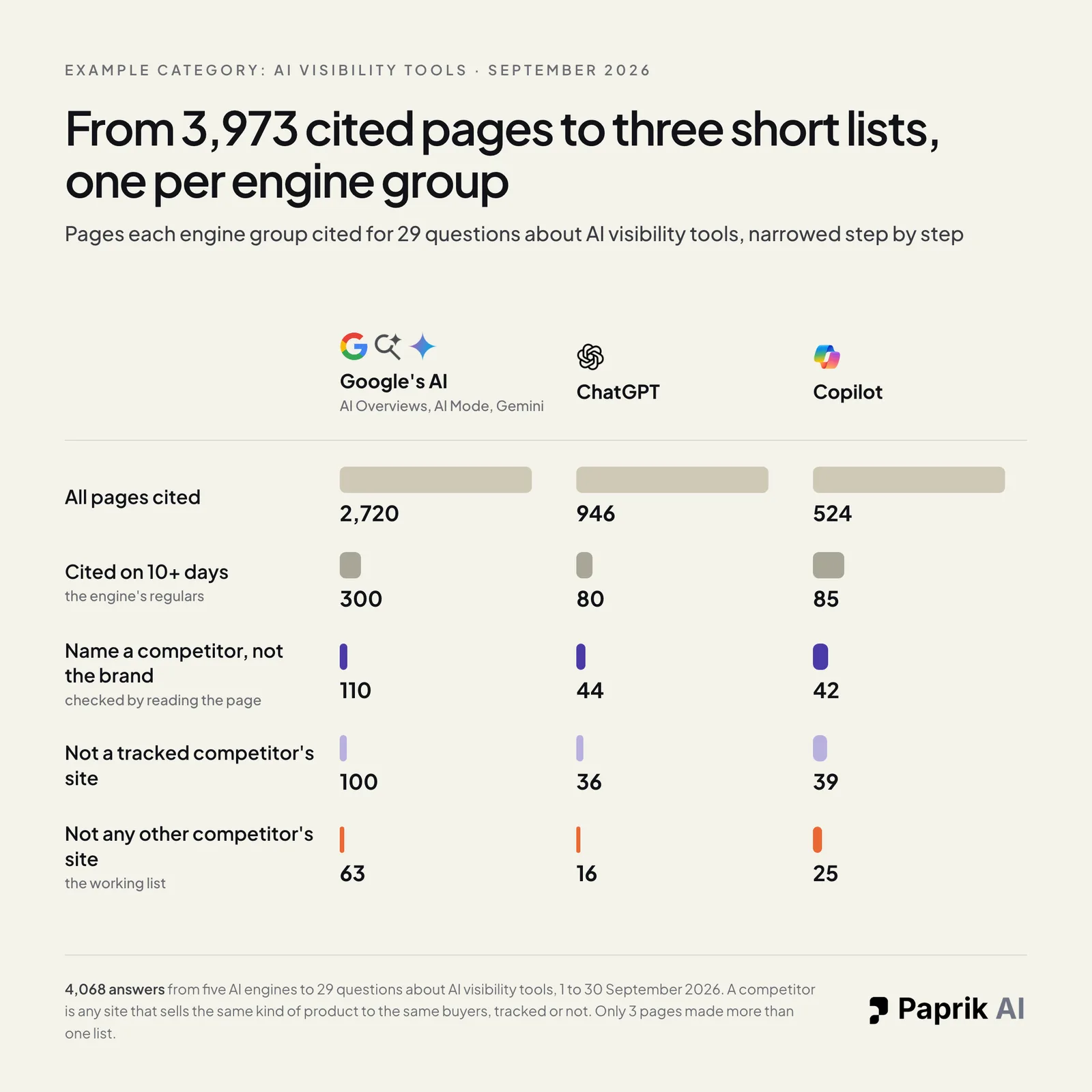
Competitors nobody had been tracking owned a third or more of the pages that named a competitor. Once they were removed, each list was down to a few dozen pages.
Most of what's left will be "best tools" lists and comparisons written by SEO platforms, agencies, software companies with large blogs, trade publishers and review sites. On Google's list, expect YouTube videos too.
Step 5: Decide where to start
Work through each list in this order:
Pages on more than one engine's list.
Pages the engine cited on the most days.
Pages that are kept up to date. ChatGPT often adds the current year to its searches, so a list refreshed every year keeps matching them. A page last touched two years ago is less likely to be maintained, or to get your addition.
Step 6: Ask the authors to add you
For a list article, you need the author to add an entry for you. Find the byline or the company's content lead, and send them:
One accurate paragraph on what you do and who it's for, in the same words you use everywhere else.
Your pricing, or where to find it.
How you differ from the tools already on the list, stated plainly.
A screenshot or a login to try it, if they test what they list.
For a how-to guide that names tools, ask for a mention in the specific section where tools come up, and say which section. Follow up once if you don't hear back.
From the outreach we've run for Paprik.ai as well as for our clients, the reply rate from these list owners is around 5% to 10% and it typically takes anywhere from 1 week to 1 month from the time you send the email to be added to their page.
Step 7: Publish your own comparison for the rest
Some authors won't add you, usually because they sell a competing product. For those lists, publish your own comparison page: the criteria buyers use to choose, each option including your competitors, their pricing, who each one suits, and a visible last-updated date. Update it every month. Ours is cited by all five engines we track.
Step 8: Re-run it every month
Each engine's regulars hold for a few weeks and drift over months. Re-run steps 1 to 5 each month, move pages that now name you to the "names you" list, and check whether the answers that cite them have started naming you too.
When almost every page belongs to a competitor
In some categories, step 4 leaves almost nothing. In one we looked at, Mac dictation apps, every page Copilot kept going back to belonged to a competitor app. If that happens on one of your lists, there's nothing to pitch for that engine, and your own comparison page has to do most of the work.