How to measure AI search driven traffic?
Tally's biggest acquisition channel is AI search, and their analytics never showed it. The one-question fix that surfaces your AI-driven signups.
Author
Founder
Abhilash is the Founder of Paprik AI. He writes about AEO, AI search visibility, and how brands can win in AI-driven discovery.
TL:DR
Tally, the form builder, just published their $5M ARR update. They added $1mn in ARR in just 6 months, with a team of 11 and no crazy marketing spend.
But the thing that really stood out for me was this: AI-powered search has overtaken word of mouth as their single biggest acquisition channel. Not "a promising signal to watch." The #1 channel! Bigger than the viral loop they've compounded for 4 years.
ChatGPT, Claude and Gemini are now sending Tally more new users than any of the other channels.
"We don't see it in our analytics. Where's the traffic?"
This is the most common pushback I hear from marketing leaders when AI search comes up and I get it.
AI search doesn't behave like Google. Users don't click a referral link that shows up cleanly in "referral/chatgpt.com" source. They ask a question, get an answer then open a new tab and type your brand name or URL directly. That traffic lands as direct or branded search and you never connect it back to the AI recommendation that started the journey.
The referral data you do see understates the channel. Only users who click a citation link show up as referrals - Perplexity makes those easiest to segment in GA4 - while the larger share of AI-driven visitors never carries a referrer at all.
So how did Tally actually measure this?
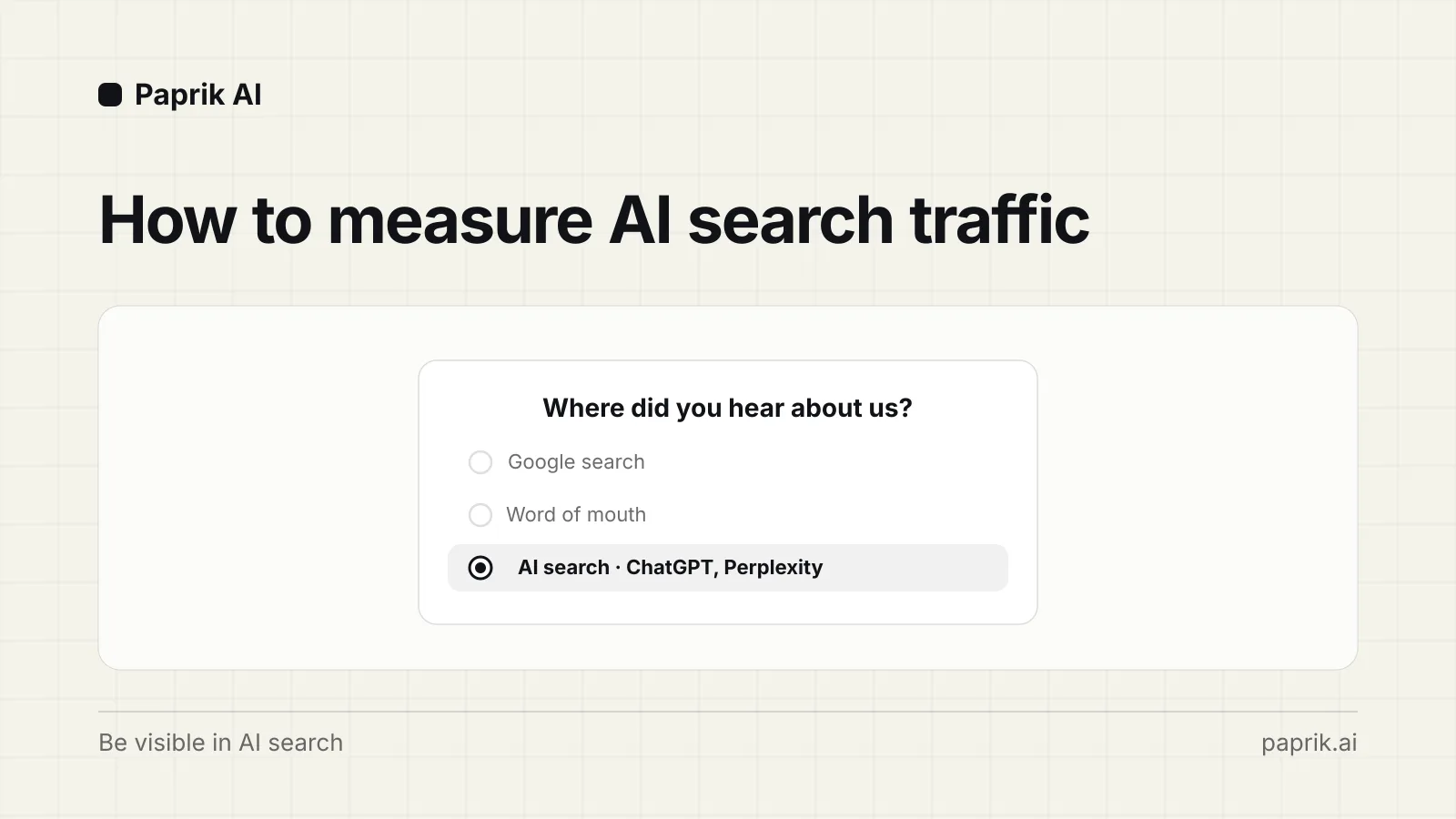
They just ask users. A simple onboarding survey: "How did you find us?" That's it. And the data showed them not just that AI was sending users, but which prompts people used and which models are growing fastest right now.
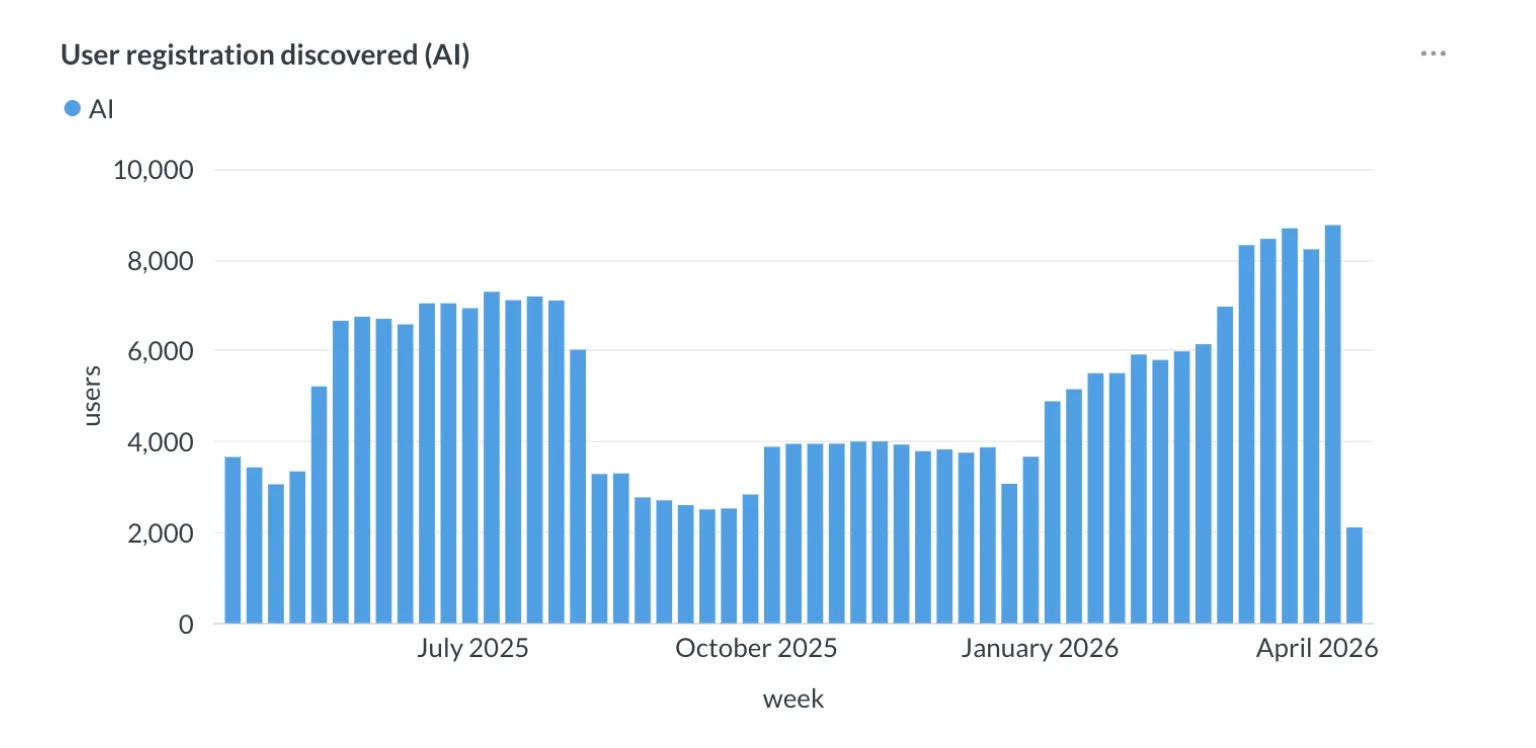
Source: Tally’s $5mn ARR update
Their weekly AI-sourced signups have gone from ~3k to ~9k, roughly 3x in under a year.
Two things worth noting in the chart:
The dip around October 2025 was largely ChatGPT's entity update, where it started mentioning fewer brands per answer
The climb from January 2026 onward tracks the overall increase in AI adoption and increased adoption of Gemini and Claude specifically
3 key takeaways
Add one question to your onboarding. "How did you find us?" Run it for 30 days. You'll almost certainly find AI in the data, the question is just how much. Set a baseline now, so you know how important this channel actually is for you - the conversion data says it is bigger than its traffic share suggests
AI search isn’t awareness-driven brand marketing, it’s “in-market brand marketing”. The user already has intent. When your product shows up in an AI answer, you’re not building recall, you’re influencing a live decision
Treat AI like a real acquisition channel and measure it accordingly. Tally tracked which prompts drove signups and saw the shift early, most teams don’t, because this traffic hides under direct and branded search.
This is what we track at Paprik.ai where brands show up in AI-generated answers, who's winning in your category, and what's actually moving the needle. If you're curious what this looks like for your space, happy to show you.