Do you need to invest in AEO?
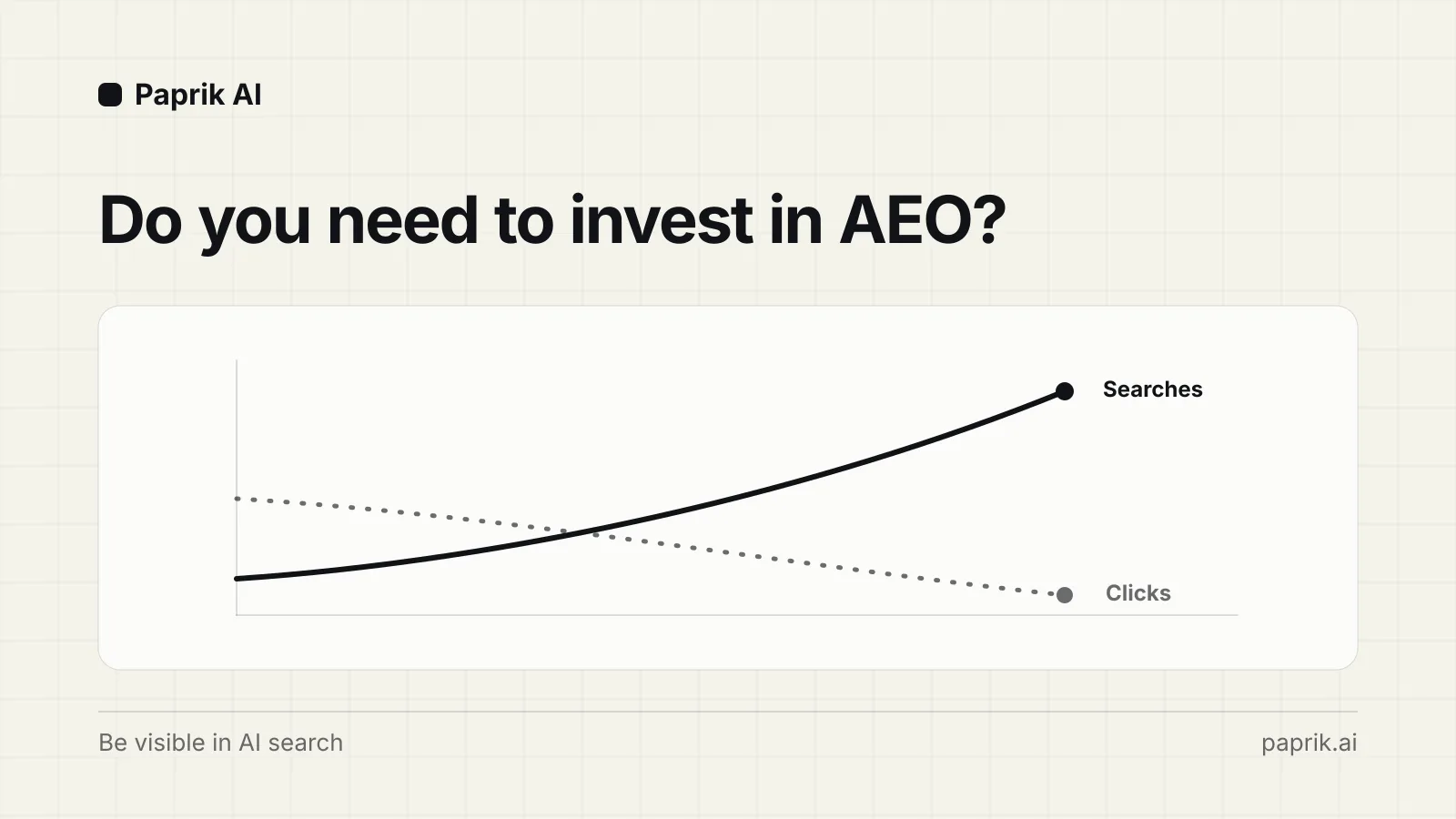
Search is growing while clicks shrink, and AI-driven visitors convert several times better. The data on where this shift helps you and where it hurts.
Author
Founder
Abhilash is the Founder of Paprik AI. He writes about AEO, AI search visibility, and how brands can win in AI-driven discovery.
Short answer: if your business depends on qualified, high-intent visitors - SaaS, marketplaces, service providers - the data says yes, answer engine optimization has earned a place in your plan. AI-driven traffic is still under 2% of the total for most sites, but it is growing 5-7x year over year and converts about 6x better than traditional organic search. If you monetise pageviews at scale, the same shift works against you. Here is the data behind both halves.
~60% of Google Searches Now End Without a Click
Google search is growing. Traffic is not.
Over the past two years, search volume has increased by more than 20%, crossing ~14 billion searches per day. At the same time, an estimated ~60% of searches now end without a click, up from ~45–50% in the pre-AI era.
Search behavior is shifting. The implications depend heavily on your business model.
The structural shift in search
The core change is simple:
More searches are happening
Fewer users are clicking through to websites
For publishers, this is a structural problem.
Fewer clicks → fewer pageviews
Lower pageviews → lower ad revenue
Some projections already point to a ~43% decline in search-driven traffic over the next few years.
But this same shift is producing a very different outcome for product and service businesses.
The rise of AI-driven traffic
Traffic from AI tools (LLMs) is still small today—less than 2% of total traffic in most cases.
But it is growing rapidly:
5–7x year-over-year growth
More importantly, it behaves differently.
How AI traffic behaves differently
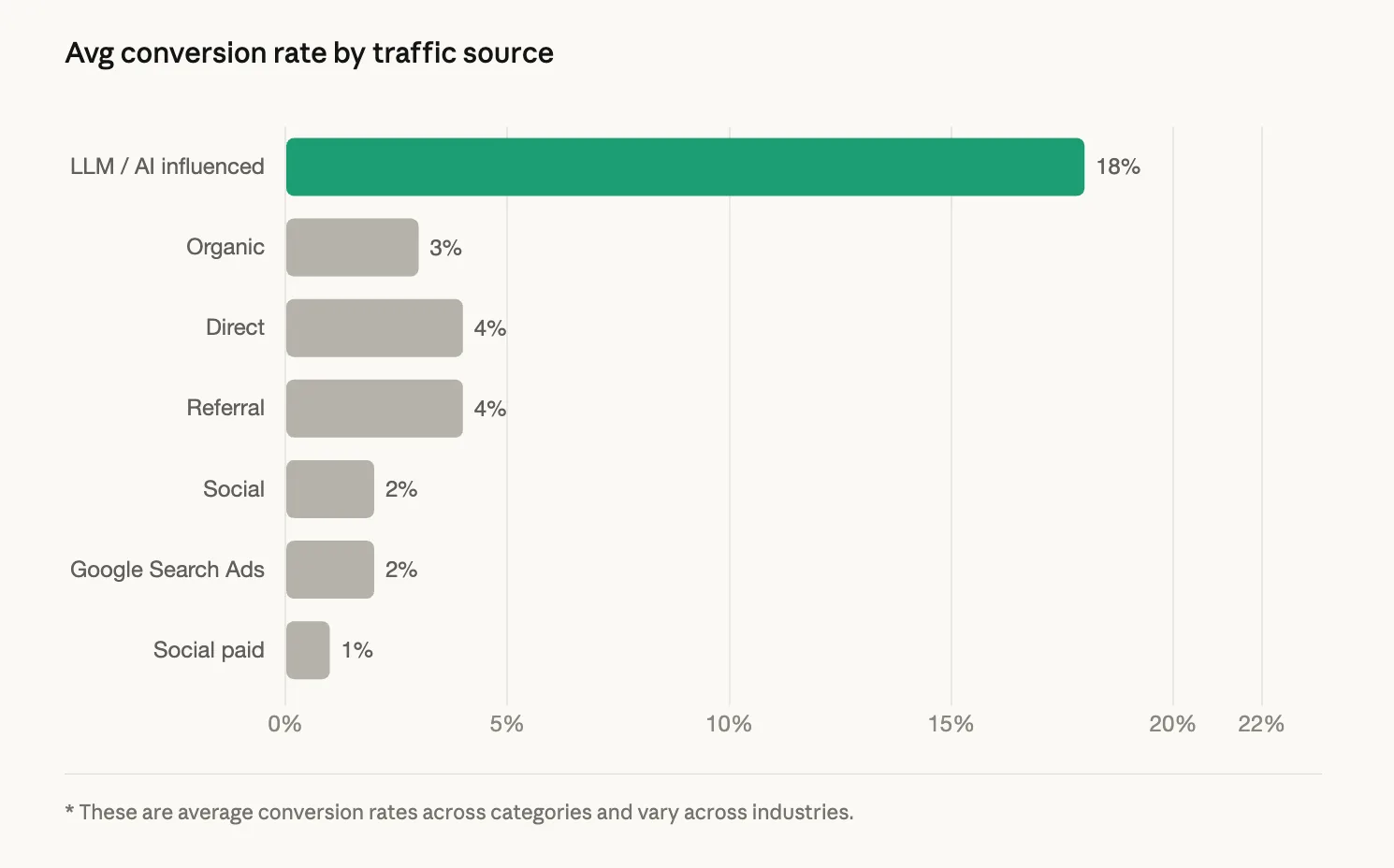
Compared to traditional organic traffic, AI-driven users show stronger intent:
~18% conversion rates (~6x higher than traditional organic)
~50% more pages viewed per session
~8 seconds more time spent on site (on average)
This is not just more traffic, it is higher-quality traffic.
Why this is happening
The research phase is being compressed.
Previously, a typical journey looked like:
Open multiple tabs
Compare options
Read reviews
Gradually form a decision
Now, AI tools handle much of that upfront.
Users arrive with:
Pre-filtered options
Summarized comparisons
A narrower consideration set
By the time they land on your website, they are often validating a decision, not exploring.
Who benefits (and who doesn’t)
This shift creates a clear divide:
Businesses that depend on scale
Publishers
Ad-driven platforms
Impact:
Fewer clicks
Lower traffic
Declining inventory
Businesses that depend on intent
SaaS companies
Marketplaces
Service providers
Impact:
Higher conversion rates
More qualified visitors
Shorter sales cycles
The long-term shift
By 2028, an estimated $750 billion in consumer spend will be influenced by AI-mediated discovery.
The discovery layer is changing from:
“Find options”
to“Get answers”
That changes how brands are surfaced—and how decisions are made.
What should you do?
1. Understand your current visibility
Before optimizing anything, establish a baseline:
Do you appear in AI-generated answers?
For which prompts?
How often vs competitors?
Which sources are being cited?
Without this, optimization is guesswork. How to build that baseline, step by step: how to track AI visibility - and what AEO tools actually measure.
2. Shift your optimization target
Stop optimizing for volume alone.
AI traffic represents:
Higher intent
Higher conversion
Treat it as a premium segment, not just another channel.
3. Optimize for extraction, not just ranking
AI systems prefer content that is:
Clearly structured
Direct and unambiguous
Easy to extract and summarize
This is different from traditional SEO content.
Focus on:
Clear sections and headings
Direct answers
Well-structured comparisons
4. Invest in credibility signals
AI systems rely heavily on external validation.
Important signals include:
Mentions in trusted publications
Third-party reviews
Consistent presence across authoritative sources
A small investment in digital PR can have outsized impact here.
The real question
The question is no longer:
“How do I rank on Google?”
It is:
“How do I become the source that AI systems trust and cite?”
Most teams have not built this layer yet.
Where this is going
AI is not replacing search—it is reshaping how search outcomes are delivered.
Fewer clicks
More synthesized answers
Higher-intent visits
If your business depends on qualified users, this shift can work in your favor—if you adapt early.
Final thought
This is still early.
Most companies are not yet measuring:
their visibility in AI answers
their share of voice
or their citation sources
That creates an opportunity. The simplest way to start: add one question to your onboarding.